
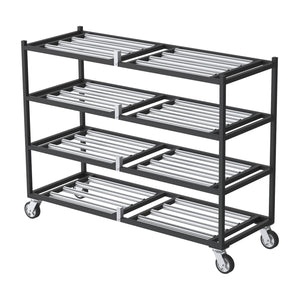
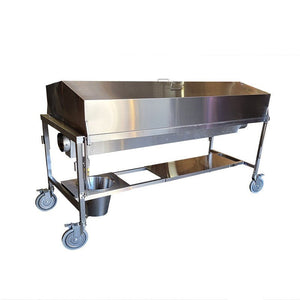


3-Body vs. 4-Body Mortuary Cooler — How to Choose the Right Capacity for Your Caseload

The decision between a 3-body and 4-body mortuary cooler comes down to one number: how many bodies your facility holds simultaneously at peak, not on average. Understanding that distinction prevents the chronic frustration of operating a full cooler during your busiest weeks — and it prevents the over-investment of paying for capacity that sits empty year-round.
The Right Framework: Peak Simultaneous Hold, Not Annual Caseload
Many funeral home directors size their cooler based on annual case count. That metric is helpful but incomplete. A facility handling 150 cases per year with consistent 3-day turnaround might only need 2 tray positions simultaneously. But a facility with the same caseload and erratic service scheduling — where several families request services within the same week — might need 5 positions simultaneously. Run your peak simultaneous hold number before making a capacity decision.
A practical method: look at your records from the last two years and identify the single week where you held the most bodies simultaneously. That number, plus one buffer position, is your minimum cooler capacity.
3-Body Mortuary Cooler: Best Fit Profile
- Peak simultaneous hold of 2–3 bodies
- Annual caseload of 75–175 cases
- Consistent turnaround within 48–72 hours
- Single-location operation with predictable intake patterns
- Preparation room with limited wall space
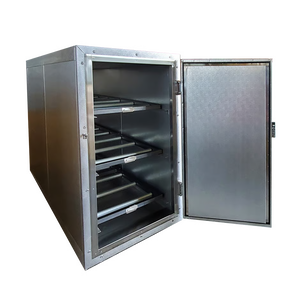
Browse the 3-body mortuary cooler collection and read the full 3-Body Mortuary Cooler Guide for configuration details.
4-Body Mortuary Cooler: Best Fit Profile
- Peak simultaneous hold of 3–4 bodies
- Annual caseload of 150–300 cases
- Service scheduling that creates holding periods longer than 72 hours
- Geographic market with higher bariatric decedent frequency (extra-wide 4-body models available)
- Facility receiving transfers from other homes or providers
Browse the 4-body mortuary cooler collection, including the Model 4BX Extra-Wide for facilities with bariatric storage needs.
The Financial Case for Choosing Up
The price difference between a 3-body and 4-body mortuary cooler is typically modest relative to the operational cost of running short. When your cooler is full and a call comes in, your options are: turn down the case (lost revenue), transfer to another facility (logistics cost and relationship risk), or hold a body improperly (compliance risk). A single declined case at average funeral home revenue typically exceeds the incremental cost difference between a 3-body and 4-body unit.
Both units qualify for IRS Section 179 deduction — up to $1,250,000 in the year of purchase — and American Mortuary Coolers financing approvals come within 24 hours. See details at our financing page.
When Neither Is Enough: 6-Body and Beyond
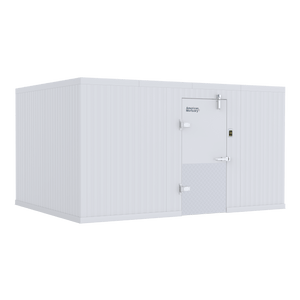
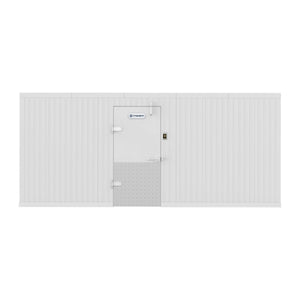
Facilities consistently holding more than 4 bodies simultaneously should evaluate the 6-body mortuary cooler or our multi-body refrigeration systems. For the full capacity tier overview, read our Multi-Body Mortuary Cooler guide. High-volume facilities may find that a walk-in mortuary cooler provides superior economics at scale — the Walk-In Mortuary Coolers 2026 guide covers the threshold where walk-in economics beat upright.
Both Options: Factory-Direct, White-Glove, Ships Fast
Whether you choose a 3-body or 4-body configuration, American Mortuary Coolers delivers the same factory-direct experience: units built in Johnson City, Tennessee since 2009, an A+ BBB rating, 7,500+ customers served, FREE Level 2 White-Glove Installation on qualifying orders, and in-stock units shipping within 48 hours. Call 1-888-792-9315 and our refrigeration specialists will help you finalize the right capacity decision for your specific caseload profile.
American Mortuary Coolers & Equipment | Tennessee-Built Since 2009 | A+ BBB Rated | All Mortuary Coolers | Upright Coolers | Walk-In Coolers | Vault Coolers | Financing | Compliance Roadmap | Contact Us | Warranty & Service Policy
