
How Long Can a Body Be Refrigerated Before Cremation?
There is no national limit on how long a body can be refrigerated before cremation. State law decides when refrigeration must start, how cold it must be, and how long a crematory must wait. This guide compares verified state rules, explains what really sets the hold time, and shows how to size cold storage for cremation volume.

Families ask it. New crematory operators ask it. Inspectors ask for records that answer it. The honest answer is that a properly refrigerated body can be held until cremation is authorized and scheduled, and the law focuses on when refrigeration must begin and how cold it must be rather than a maximum number of days.
Quick answer: No federal rule caps refrigerated holding time before cremation. State rules typically require refrigeration (or embalming) once a body is held more than 24 hours after death, at 40°F or colder where a temperature is set. Some states also impose a minimum wait before cremation, such as 48 hours in Texas and 24 hours in North Carolina unless waived. Hold remains at 34–40°F, keep in-and-out and temperature logs, and confirm your own state's rule with the licensing board.
What Selected States Require
These are examples, each linked to the official text. They are not a full survey, and rules change, so confirm your state's current requirements.
| State and rule | When refrigeration applies | Temperature | Cremation timing |
|---|---|---|---|
| Florida § 497.386 | Held over 24 hours after death or pending final disposition | 40°F or below | See related crematory rules in Chapter 497 |
| Pennsylvania 49 Pa. Code § 13.201 | Held 24 hours beyond death unless embalmed or sealed | 35°F to 40°F | Disposition within 5 hours after removal from refrigeration; no public viewing of unembalmed remains refrigerated over 36 hours under normal circumstances |
| North Carolina G.S. 90-210.129 | At the crematory, unless cremation begins within 24 hours of taking custody | Not greater than 40°F | No cremation within 24 hours of death unless waived in writing |
| Texas Health & Safety Code § 716.004 | Set by Texas health rules | Set by Texas health rules | No cremation within 48 hours of the time of death unless waived by a justice of the peace, medical examiner or court order |
What Actually Sets the Hold Time
In practice, refrigeration continues until every one of these steps clears. Plan cooler capacity around the slowest of them, not the fastest.
- Authorization: The legally authorized person signs the cremation authorization. Disputes among next of kin can stretch this for days.
- Waiting period: Statutory minimums such as Texas's 48 hours and North Carolina's 24 hours.
- Death certificate and permits: Physician signature, medical examiner review and the cremation permit.
- Medical examiner holds: Investigated cases stay refrigerated until release.
- Retort schedule: The next open slot, which tightens during high-volume winter months.
- Family plans: A visitation or service before cremation adds days.
Recommended Holding Temperature
Set mortuary refrigeration to hold 34–40°F. That band sits inside every temperature rule in the table above, including Pennsylvania's 35°F lower limit, and it is the operating range published on our 2-, 3- and 4-body mortuary coolers. Freezing is a different tool. It is used for long-term anatomical or unidentified-remains storage, not routine pre-cremation holding. See our mortuary freezers if you need it.
Sizing Cold Storage for Cremation Volume
Size for your busiest week, then add margin for delays you do not control.
- Take the cremation cases from your busiest week last year and divide by 7. That gives average cases per day.
- Multiply by the average days a case waits between arrival and cremation.
- Add positions for medical examiner holds, bariatric cases, ship-ins and a retort outage.
Example: 21 cremations in the peak week is 3 per day. If each case waits an average of 3 days, about 9 decedents are on hand at once. Add 2–3 positions for holds and bariatric cases and you are planning for 11–12 positions. That points to a 12-body upright or a small walk-in with racks rather than a 4-body cabinet.
| Daily cases on hand | Typical fit | Example |
|---|---|---|
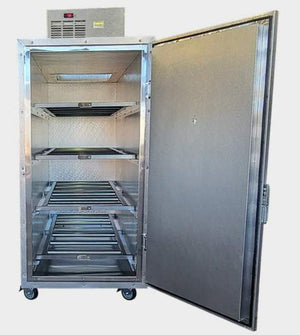
| 1–2 | 2-body roll-in or upright | 2 Body Standard Roll-In Mortuary Cooler |
| 3–4 | 3- or 4-body upright | 3 Body Standard Mortuary Cooler (600 lb per tier) or 4 Body Bariatric Mortuary Cooler (850 lb per tier) |
| 6–12 | High-density upright | 10 Body Dual-Door Mortuary Cooler or 12-body triple door |
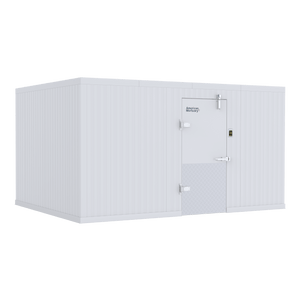
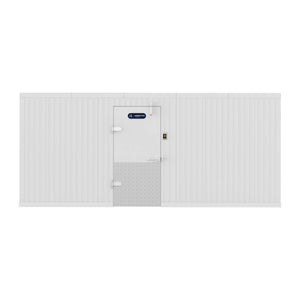
| 12+ | Walk-in with tiered racks | 8x10 Walk-In Mortuary Cooler and up, with roller racks |
 3 Body Standard Mortuary Cooler34–40°F, 600 lb per tier
 4 Body Bariatric Mortuary Cooler850 lb per tier
 10 Body Dual-Door Mortuary CoolerTwin doors, 304 stainless
 8x10 Walk-In Mortuary CoolerConfigurable walk-in
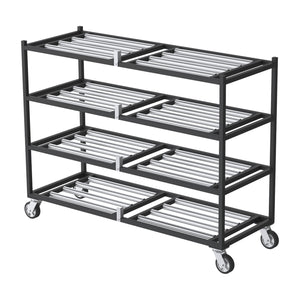
 4 Tier Side-Loading Mortuary RackFour tiers, side load
 Low Profile Powered Crematory Lift | 1,000 lb Mortuary Scissor Lift1,000 lb powered lift
Equipment That Works With the Cooler
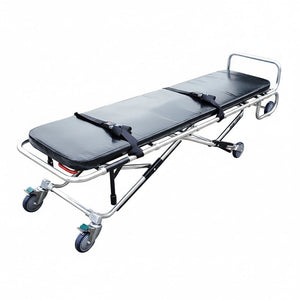
A cooler is only as useful as the handling equipment around it. Stainless body trays come in 23-inch (300 lb), 27-inch (400 lb) and 30-inch bariatric (500 lb) widths. A powered lift such as the Low Profile Powered Crematory Lift moves a case from tray to retort height without lifting by hand. A crematory floor scale with ramp records weight for the operator log. See the full cremation equipment and supplies line and our crematory scissor lift guide.
Records to Keep
- Date and time each decedent entered and left refrigeration.
- A temperature log with alarm events and corrective action.
- The signed cremation authorization and any waiting-period waiver.
- Identification checks at intake, transfer and release to the retort.
A related question is how long a body can stay in a cooler for funeral services rather than cremation. That is covered in how long a body can stay in a mortuary cooler. For layout, see the funeral home floor plan equipment checklist.
Frequently Asked Questions
Is there a maximum time a body can be refrigerated before cremation?
Not under federal law, and most states do not set a maximum. State rules focus on when refrigeration must begin and the holding temperature. Check your state for any total time-to-disposition limits.
Does a body have to be embalmed before cremation?
Generally no. Refrigeration is the usual alternative to embalming for direct cremation. Embalming may still be chosen for a public viewing, and some states restrict viewing of unembalmed remains after a set time.
What temperature should a body be kept at before cremation?
Hold remains between 34°F and 40°F. Florida and North Carolina require 40°F or colder, and Pennsylvania requires 35°F to 40°F for remains refrigerated over 24 hours.
Can cremation happen the same day as death?
Not in every state. Texas bars cremation within 48 hours of death and North Carolina within 24 hours unless the wait is waived in writing by the authorized official.
How big a cooler does a crematory need?
Multiply average daily cases by average days held, then add positions for holds and bariatric cases. Many small crematories land between a 4-body upright and a 10–12 body high-density cabinet; higher volume points to a walk-in with racks.
Questions about fit, freight or lead time? Call our Johnson City, Tennessee team at 1-888-792-9315 or email cool@mymortuarycooler.com.

