


Anatomy Lab Equipment Guide | Dissection, Storage & Pathology Systems
Anatomy Lab Equipment Guide | Dissection, Storage & Pathology Systems
Setting up or upgrading an anatomy lab requires more than simply ordering a dissection table and hoping everything fits together. A high-functioning anatomy lab integrates refrigeration, body-handling hardware, specimen storage, lighting, ventilation, and safety compliance into a single coordinated system. This guide covers every major equipment category, explains how each component interacts, and provides practical guidance on NSF requirements and budget planning for anatomy programs of any size.
Complete Anatomy Lab Equipment List
A properly equipped anatomy lab typically includes seven core equipment categories. Missing or undersizing any one of them creates bottlenecks that slow student throughput and raise compliance risk.
1. Dissection Tables
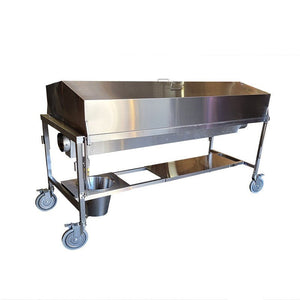
Dissection tables are the functional center of any anatomy lab. Purpose-built tables feature Type 304 stainless steel work surfaces, integrated drainage systems, and adjustable height for ergonomic use across student populations. Standard configurations include flat-top, immersion-tank (dip tank), and ventilated covered designs. For cadaver programs with high student-to-body ratios, multi-body table systems that allow simultaneous dissection by multiple student groups are worth the additional investment. American Mortuary Coolers offers electric immersion dissection tables and covered autopsy dissection tables with vented designs that meet OSHA requirements for vapor control.
2. Cadaver Refrigeration Storage
Refrigeration is the single most consequential piece of infrastructure in any anatomy lab. Cadavers must be maintained at 34°F–38°F (1°C–3°C) between dissection sessions to prevent decomposition and preserve tissue integrity for multi-semester programs. Two primary configurations serve anatomy labs:
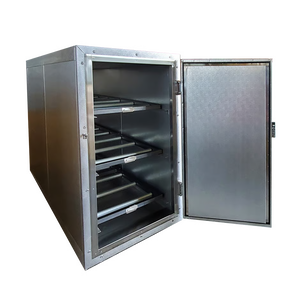
- Vault-style (individual-bay) coolers — Each cadaver occupies a dedicated, sealed bay with independent telescoping tray access. Ideal for programs where individual cadaver identity, chain of custody, and rapid access are priorities.
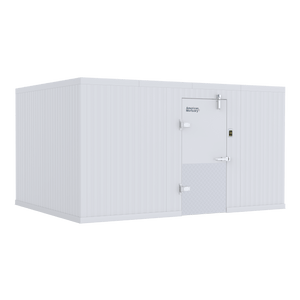
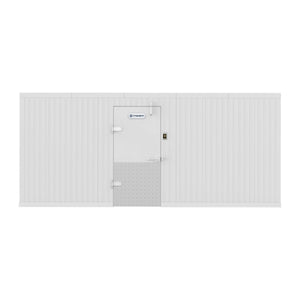
- Walk-in cooler rooms — High-capacity cold rooms accommodate body racks, multiple trays, and rolling carts simultaneously. Best for programs with 10 or more cadavers in active rotation.
Explore our lab and pathology vault coolers or walk-in mortuary coolers to identify the right configuration for your program capacity.
3. Body Racks and Lifts
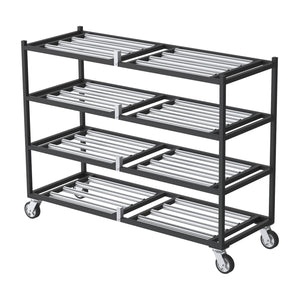
Body racks organize cadaver trays inside walk-in rooms, maximizing storage density while maintaining access. Multi-tier cantilever racks allow loading from multiple angles and simplify tray retrieval without requiring staff to reposition other cadavers. Body lifts — both hydraulic and battery-powered — are critical for safely transferring cadavers from cooler trays to dissection tables without staff injury. OSHA ergonomic guidelines for healthcare workers apply in anatomy labs; powered lift equipment is not optional at higher body weights. See our full selection of racks and lifts.
4. Specimen Containers and Tissue Storage
Gross anatomy programs generate a constant volume of excised tissue, removed organs, and specimen samples requiring separate containment. NSF-compliant specimen containers, sealed with airtight lids, prevent cross-contamination and maintain chain of custody for samples moving to pathology review. Container compatibility with your refrigeration system — specifically tray dimensions and shelf clearances — should be verified before purchase.
5. Lighting
Anatomy labs require shadow-free, high-CRI (color rendering index) surgical-grade lighting at each dissection station. Color accuracy is essential for students learning to distinguish tissue types, vascular structures, and nerve pathways. LED systems rated at 5,000K or above deliver daylight-equivalent color temperature without the heat output of older halogen systems.
6. Ventilation and OSHA Safety Equipment
Formaldehyde vapor is the primary occupational hazard in wet anatomy labs. OSHA's permissible exposure limit (PEL) for formaldehyde is 0.75 ppm as an 8-hour time-weighted average. Anatomy labs must incorporate local exhaust ventilation (LEV) at each dissection station, facility-wide air exchange rated for biohazard environments, and splash-protection PPE supply stations. Covered dissection table designs with ventilation ports reduce vapor migration at the source.
7. Transport, Cots, and Workflow Hardware
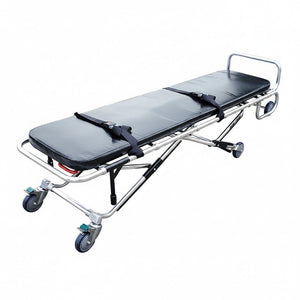
Between the storage cooler, dissection suite, and post-session return to refrigeration, cadavers are in motion multiple times per day. Stainless steel transport carts, cadaver stretchers, and low-profile cots are required to maintain dignity and prevent staff injuries during transfers. Powered and hydraulic options are recommended for bariatric cases.
Refrigeration Selection for Cadaver Programs
Choosing the right refrigeration system for your anatomy lab involves three key variables: program capacity, dissection cycle length, and available floor space.
Program capacity — Calculate peak cadaver count at maximum enrollment. A medical school running 30 student pairs typically requires 15 cadavers in simultaneous storage. Add 20% buffer capacity to account for intake timing and donor variability.
Dissection cycle length — Semester-long gross anatomy courses keep cadavers in storage for 16–20 weeks. Short-cycle programs that complete dissection in 4–6 weeks may benefit from vault-style coolers that allow rapid individual access and return without disrupting adjacent cadavers.
Floor space — Walk-in rooms require dedicated square footage and utility rough-in (electrical, drainage). Upright vault coolers can be positioned against walls and connected to standard 208-230V circuits, making them appropriate for labs with constrained footprints. Our upright mortuary coolers are available in 3-body through 12-body configurations and ship ready for immediate installation.
NSF Requirements for Anatomy Lab Equipment
NSF International standards govern the material and construction requirements for equipment used in environments where human tissue is present. NSF/ANSI 2 (Food Equipment) and NSF 49 (biosafety cabinets) provide the most directly applicable standards for anatomy lab surfaces. Key requirements include:
- Non-porous, smooth stainless steel or equivalent work surfaces with no crevices that harbor biologics
- Coving (radiused corners) at wall-to-floor and surface-to-wall junctions to prevent pooling
- Welded or seamless construction on refrigeration interiors — no exposed fasteners in contact zones
- Drainage systems that prevent backflow and comply with local plumbing codes
All American Mortuary Coolers refrigeration systems are built with Type 304 stainless steel interiors and NSF-compliant edge gaskets. Our coolers meet or exceed the material standards required for accredited anatomy programs.
Budget Planning for Anatomy Lab Setup
Anatomy lab capital projects typically fall into three budget tiers:
- Starter programs (under 10 cadavers) — Vault-style upright cooler, 2–3 dissection tables, basic rack and lift set, transport carts. Estimated equipment budget: $40,000–$80,000.
- Mid-size programs (10–20 cadavers) — Walk-in cooler room or high-density upright system, 6–12 dissection tables, powered lifts, full casework suite. Estimated equipment budget: $100,000–$200,000.
- Large academic programs (20+ cadavers) — Custom walk-in room design, multi-tier rack systems, immersion dissection tables, integrated ventilation. Estimated equipment budget: $200,000+.
American Mortuary Coolers offers institutional financing options for educational buyers. Visit our financing page to learn about terms available for universities, medical schools, and allied health programs. Questions about configuration or lead times? Contact our team at sales@mymortuarycooler.com or call 1-888-792-9315.
Why Choose American Mortuary Coolers for Your Anatomy Lab
American Mortuary Coolers designs and manufactures purpose-built mortuary and anatomy lab refrigeration from our Johnson City, Tennessee facility. Our equipment carries BBB A+ accreditation, is built with UL and NSF-listed components, and is backed by the industry's most comprehensive warranty program. As an NFDA 2026 Supplier, we serve funeral homes, medical examiners, hospitals, and university anatomy programs nationwide with factory-direct pricing and expert technical support.
Ready to plan your anatomy lab? Call 1-888-792-9315 or email sales@mymortuarycooler.com for a no-obligation consultation and custom equipment quote.
