


Where formaldehyde is present, the employer owns exposure assessment, engineering controls, training, medical surveillance, PPE, labels, and records.
OSHA 29 CFR 1910.1048 →Shop Commercial Walk-In Cooler Evaporators & Condensing Units
Compare the actual equipment below, choose the required options and add an eligible configuration to your cart. Quote-only and configured systems retain their dedicated product path.
- Choose the equipment
- Select options and quantity
- Review your cart or itemized quote
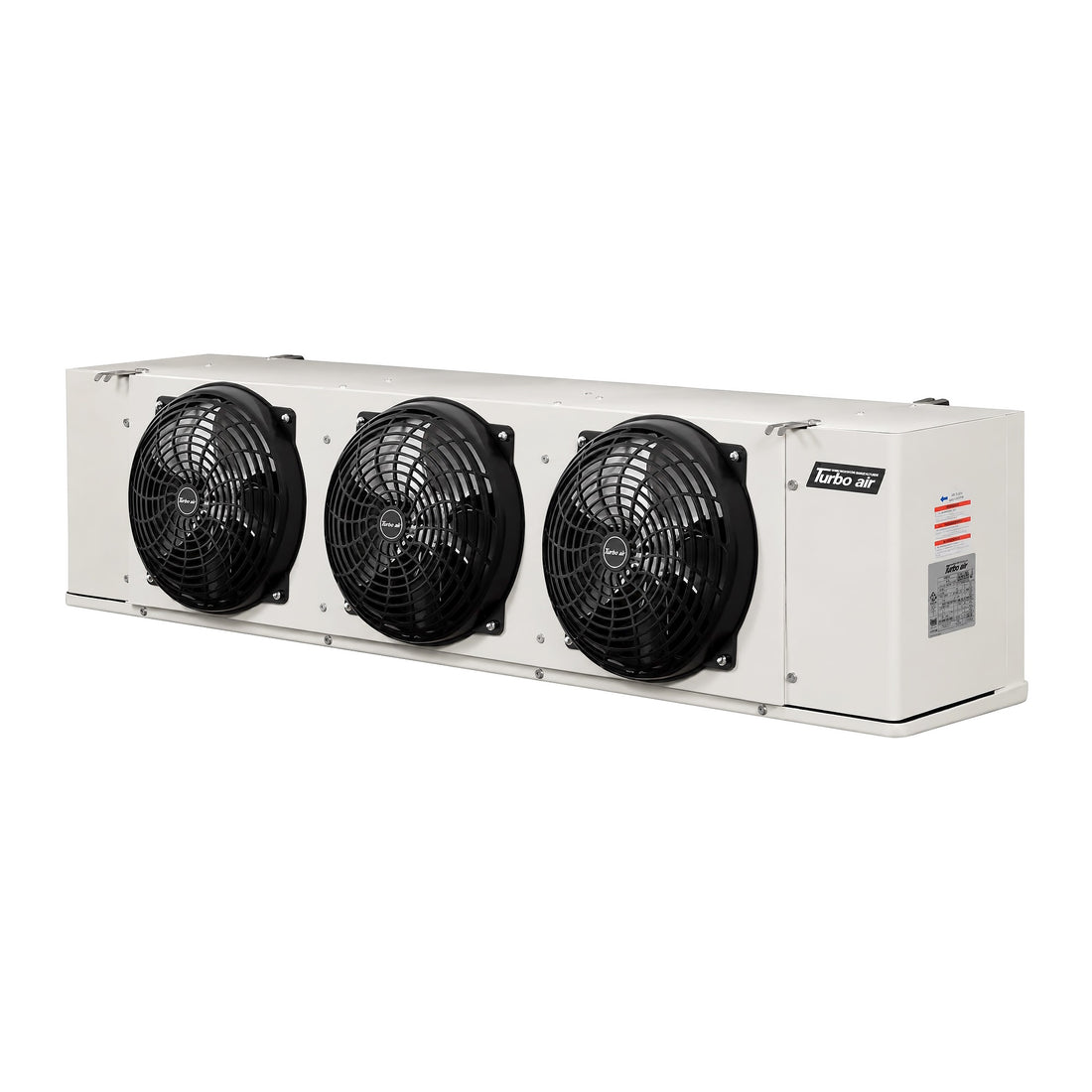
Turbo Air Evaporator
Sale$2,994.00
$2,455.60
 Estimated from
Turbo Air LED090BENM Low Profile Freezer Evaporator
$2455.6
Check financing
Equipment estimate. Approval required. Tax and delivery extra.
Built to orderPO accepted
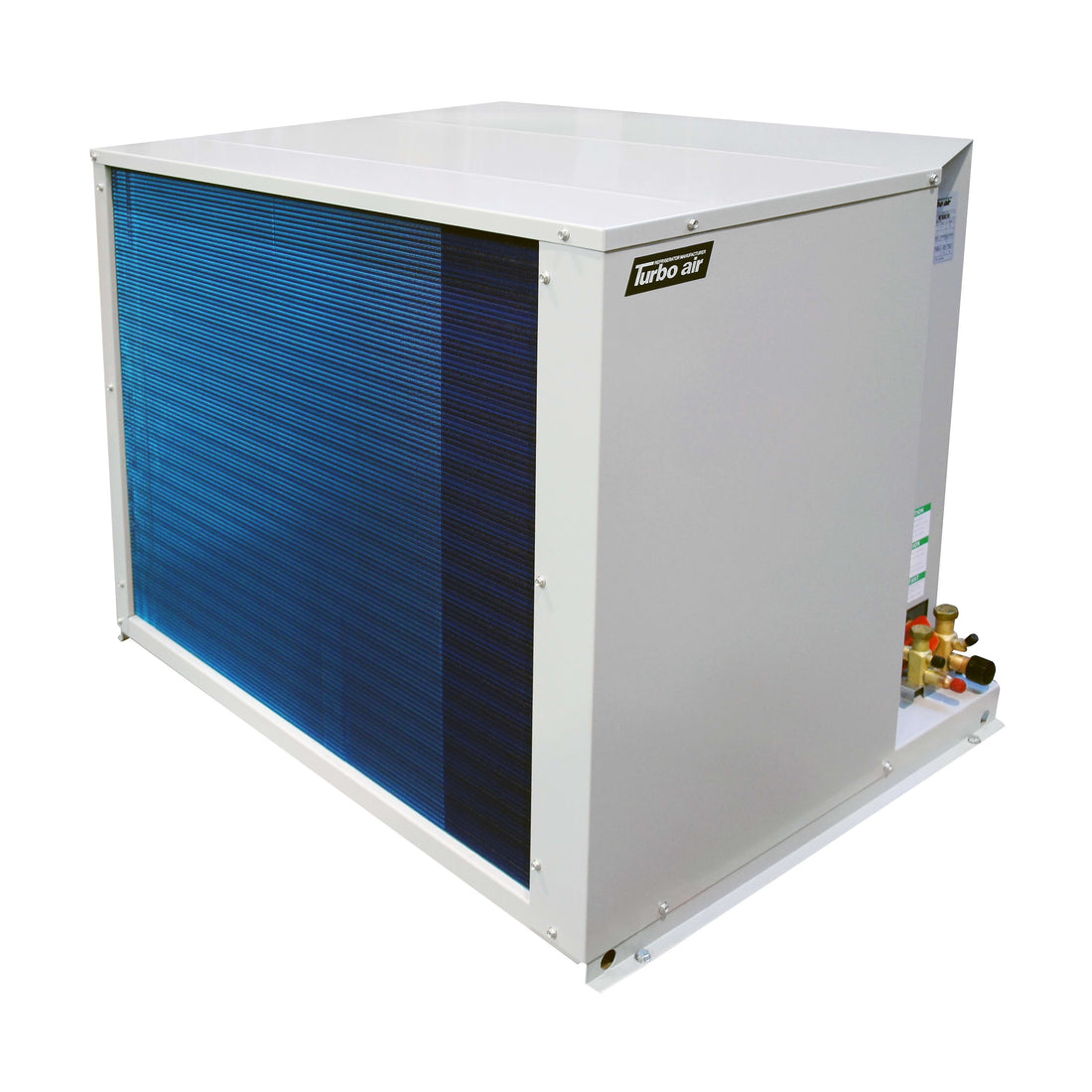
Turbo Air Condensing Unit
Sale$5,154.00
$4,383.72
Estimated from
Turbo Air TS025XR404A2A Walk-In Cooler Condensing Unit
$4383.72
Check financing
Equipment estimate. Approval required. Tax and delivery extra.
Configurable buildPO accepted
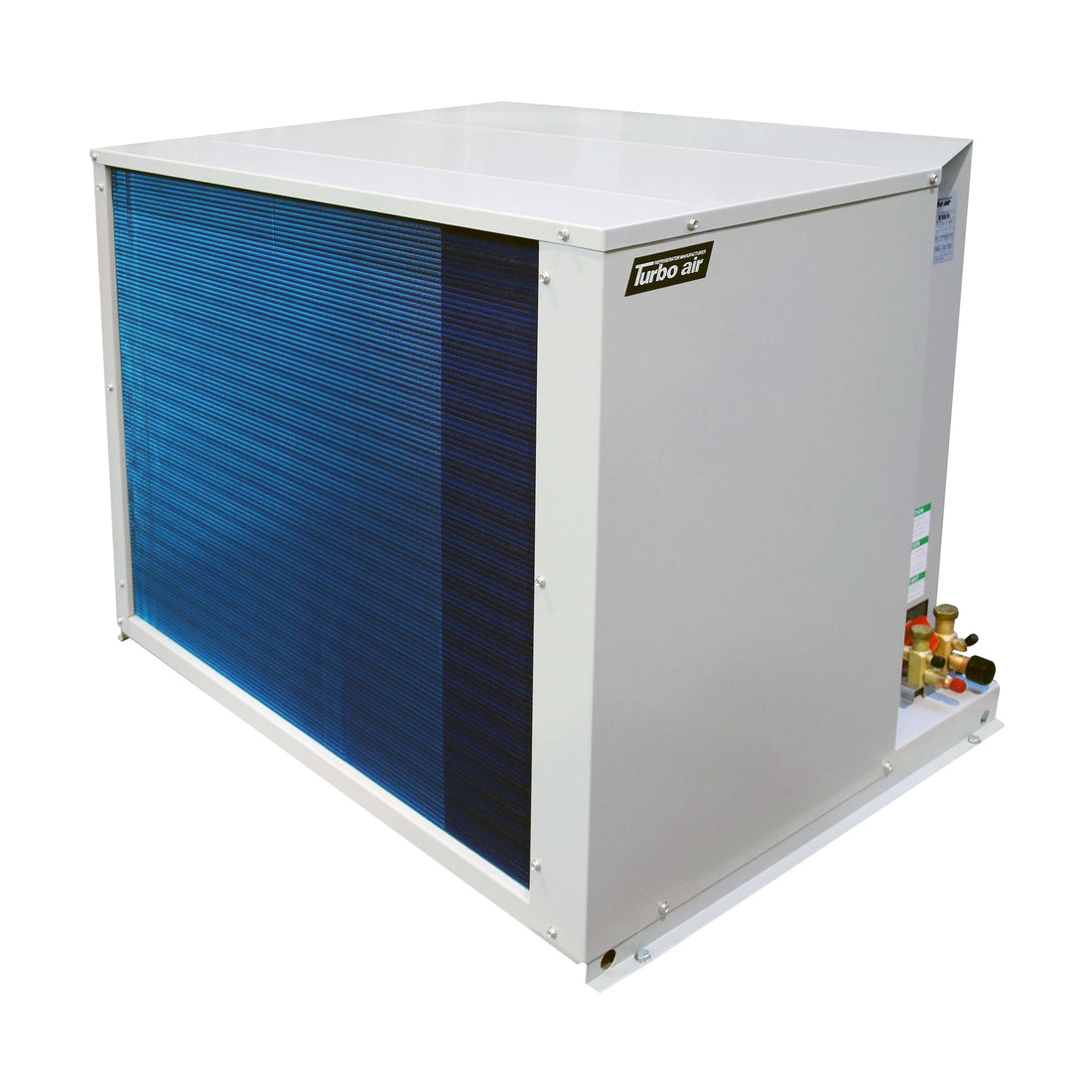
Turbo Air Condensing Unit
Sale$6,066.00
$4,882.68
Estimated from
Turbo Air TS050MR404A3A 5 HP Scroll Cooler Condensing Unit
$4882.68
Check financing
Equipment estimate. Approval required. Tax and delivery extra.
Built to orderPO accepted
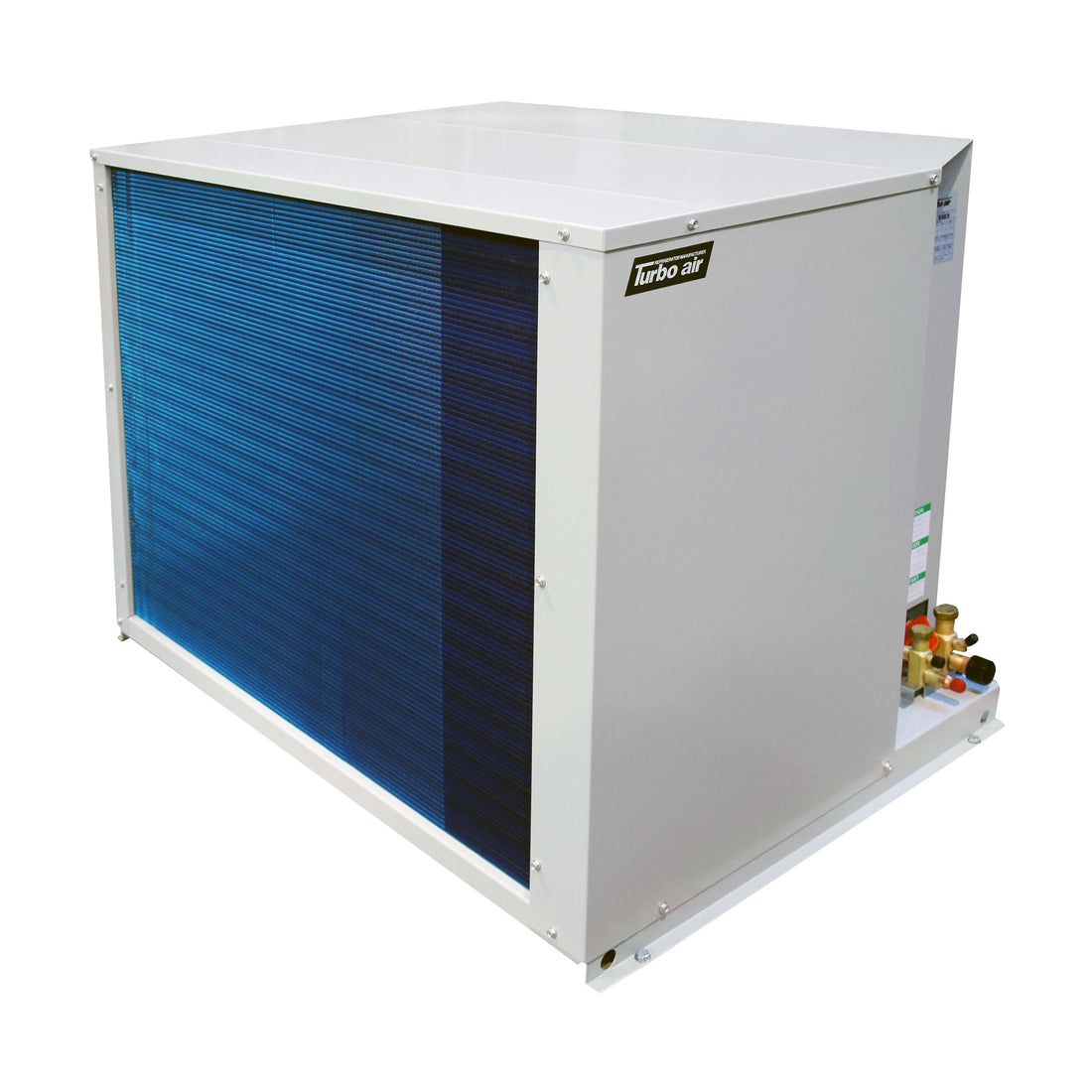
Turbo Air Condensing Unit
Sale$4,520.00
$3,637.66
Estimated from
Turbo Air TS020MR404A2A 2 HP Scroll Cooler Condensing Unit
$3637.66
Check financing
Equipment estimate. Approval required. Tax and delivery extra.
Built to orderPO accepted
Resources
Compliance, State Minimums & Operating Conditions
Warranty operating conditions & state minimum requirements for AMC coolers — ambient limits, installation & maintenance obligations.
Compliance, State Minimums & Operating Conditions
American Mortuary Coolers — founded as Funeral Source One in 2009 — manufactures USA-made mortuary refrigeration for funeral homes, hospitals, medical examiners, and government agencies. Compliance is shared across the facility owner/operator, licensed trades, employer safety program, manufacturer documentation, and applicable authority having jurisdiction. No equipment purchase alone establishes compliance.
Reviewed: August 19, 2026 | Planning reference for AMC, AME, and USPE projects—verify model-specific documents
2026 verified compliance reference
Compliance is a facility program—not a product badge.
Equipment can support a compliant workflow, but no cooler, table, alarm, or label independently establishes OSHA, EPA, DOE, ADA, FTC, state-board, health-department, building-code, or local-AHJ compliance.
Facilities with occupational exposure need an exposure-control program; hazardous chemicals also require labels, safety data sheets, and training.
OSHA bloodborne pathogens → · Hazard communication →Opening a refrigerant circuit, adding or removing refrigerant, and covered installation/service work must be handled by appropriately certified technicians.
EPA Section 608 →DOE standards apply when a product meets the federal WICF definition. Products designed and marketed exclusively for medical, scientific, or research use are excluded from that definition.
DOE walk-in coolers and freezers →Accessibility is evaluated at the facility and route level—doors, thresholds, maneuvering clearances, controls, and applicable alterations—not through a blanket equipment certification.
2010 ADA Standards →The FTC Funeral Rule governs funeral providers' itemized price lists and required consumer disclosures; it is not an equipment certification program.
FTC Funeral Rule →
AMC should provide
Quoted configuration, model-specific submittals, dimensions, electrical and refrigeration data, warranty terms, freight scope, and available listings for the exact components supplied.
Facility team must verify
State and local requirements, permits, accessible route, utilities, drainage/condensate plan, ventilation, worker-safety programs, installation trades, commissioning, monitoring, and AHJ acceptance.
Audit status: reviewed August 19, 2026 against current federal source pages. This is a purchasing and planning reference—not legal, engineering, tax, workplace-safety, or code advice. State and local requirements can be more specific and must be verified for the project address and facility type.
⚠ CRITICAL — Read Before Ordering Confirm the ambient rating and installation conditions on the signed quote and model-specific submittal. Many standard configurations require climate-controlled indoor installation; high-ambient or unconditioned sites require written engineering review before ordering. Website category language does not replace the quoted specification.
Ambient Conditions & Pre-Order Site Review
Ambient-temperature limits, clearances, ventilation, electrical service, condensate handling, and installation environment are model- and configuration-specific. Confirm each requirement on the signed quote, approved submittal, installation manual, and equipment nameplate. Category copy and general planning guidance do not replace those documents.
Complete a pre-order site review with the appropriate licensed trades. Verify:
- Year-round room temperature and humidity against the selected model's published operating range
- Required condenser airflow, service clearances, and heat rejection
- Electrical service against the approved submittal and nameplate
- Condensate or drainage method, floor conditions, access path, and any plumbing requirements
- Whether the space is conditioned, ventilated, protected from weather, and approved by the authority having jurisdiction
Confirm conditions before authorizing production or shipment. If the proposed site falls outside a published limit—or is a garage, shed, outdoor, rooftop, high-ambient, or otherwise unconditioned location—request written engineering review before ordering. Returns, cancellations, and exchanges remain governed by the applicable written quote, order terms, and published policies; contact 1-888-792-9315 before purchase if any condition is uncertain.
| Site item | What controls | Pre-order check |
|---|---|---|
| Ambient temperature & humidity | Selected model's published range | Verify year-round conditions |
| Condenser clearance & ventilation | Approved submittal / installation manual | Confirm service space and heat rejection |
| Electrical service | Approved submittal and equipment nameplate | Licensed-electrician review |
| Drainage / condensate | Model design, site plan, and plumbing/AHJ requirements | Confirm method and discharge location |
| Floor, access & installation environment | Project documents and local code/AHJ | Verify load path, level surface, access, weather protection, and approvals |
State Minimum Standards — Your Jurisdiction Controls
Requirements for mortuary cold storage vary by state, county, accrediting body, and facility type. AMC makes no representation that any product configuration meets any specific jurisdiction's minimum requirements unless stated in writing on a signed quote. It is the buyer's sole responsibility to verify applicable state board, health department, accreditation body, and local AHJ requirements before purchase.
Common variables that differ by state include:
- Minimum number of cases that may be held per cooler
- Required interior temperature ranges and holding times—verify the current rule with the state board, health department, or AHJ
- Temperature recording and alarm requirements
- Ventilation and exhaust requirements for prep rooms
- Drain and sanitation standards
- Inspection and licensing requirements for embalming rooms
AMC can configure equipment to meet specific written requirements when they are provided with your RFQ. Contact us at 1-888-792-9315 or submit an RFQ with your jurisdiction's requirements attached.
Drainage & Condensate Planning — Verify the Exact Model
Drainage is not a universal DOE requirement for every mortuary refrigeration product. Condensate handling depends on the evaporator, defrost method, packaged or remote configuration, installation manual, plumbing code, and local AHJ. Confirm the quoted model’s drain and condensate requirements before ordering; use a licensed plumber where the approved plan requires a site drain.
Warranty Void Conditions
Warranty coverage is void — and no return or exchange will be honored — when failure results from any of the following:
- Operation above 80°F rated ambient temperature
- Outdoor or unconditioned installation not approved in writing by AMC
- Insufficient clearance around the condenser coil
- Improper electrical supply or wiring not meeting NEC and local code
- Installation not performed to published specifications
- Refrigerant service performed by personnel without EPA 608 certification
- Unauthorized modification or alteration of equipment
- Failure to perform routine maintenance (coil cleaning, condensate management, filter cleaning)
- Failure of customer to perform pre-order THI audit and order equipment appropriate for site conditions
See also: Warranty Policy (WR-1.0)
Frequently Asked Questions — Compliance & Site Requirements
What is the maximum ambient temperature for AMC mortuary coolers?
There is no single sitewide ambient rating. Confirm the maximum ambient condition on the signed quote and model-specific submittal. Many standard configurations require conditioned indoor installation and may carry an 80°F rating; high-ambient options and remote systems differ.
What is a THI audit and when do I need to do it?
A THI review is AMC’s pre-order planning framework, not a government certification or substitute for an engineer or AHJ review. Document worst-case ambient temperature, humidity, ventilation, clearances, utilities, access, and whether the space is conditioned.
Can I install a mortuary cooler in a garage or shed?
Do not assume an unconditioned, outdoor, garage, or shed installation is acceptable. Use such a location only when the exact configuration is engineered for those conditions and approved in writing on the quote and submittal; otherwise provide a conditioned indoor installation.
What happens if my state requires a different temperature range than 34–38°F?
The controlling temperature range, holding time, alarm, and recordkeeping rules come from the applicable jurisdiction and facility type. Attach the current requirement to the RFQ and require the quoted operating range and options to be confirmed in writing.
Do I need a drain line?
Not universally. Confirm the condensate and drainage method for the exact quoted model, its installation manual, plumbing code, and local AHJ. Some configurations require a site drain; others use different condensate-management methods.
What electrical service does a mortuary cooler require?
Requirements vary by exact model and refrigeration package. Do not infer voltage or amperage from body capacity or category. Use the signed submittal and nameplate, and have a licensed electrician verify the circuit, disconnect, overcurrent protection, phase, and local-code requirements before delivery.
Can I return or exchange equipment if my facility turns out to be incompatible?
No. Once an order has shipped or been delivered, AMC does not accept returns or exchanges on the basis of site incompatibility. This policy exists because site conditions — ambient temperature, ventilation, drainage — are the buyer's responsibility to assess before ordering. If you are uncertain whether your facility is compatible, contact us before placing your order. We will help you evaluate your site conditions.
Featured industry reference
Read the water cremation guide →Water cremation & alkaline hydrolysis
A plain-language overview of the process, terminology, facility questions, and legal-status considerations. Laws and wastewater approvals vary; confirm current requirements with the applicable state regulator and local utility.
Questions About Your Facility? Contact Us Before Ordering.
We strongly encourage all buyers to contact us with site photos and dimensions before placing any order. Our team can help evaluate whether your facility is appropriate for mortuary refrigeration and advise on any upgrades needed.
Call 1-888-792-9315 Submit an RFQ Send Site PhotosCompare cold storage around the space and loading plan
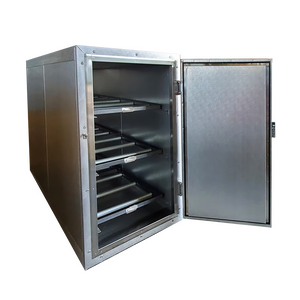
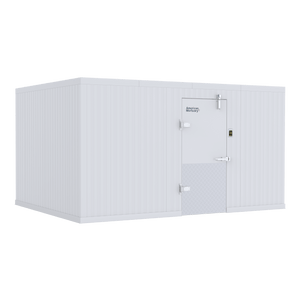
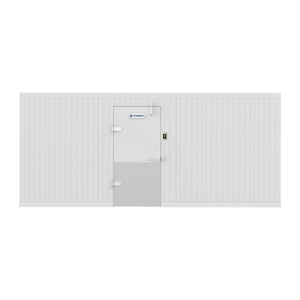
Start with the equipment you need to move into storage, the usable room dimensions and the available access route. An upright refrigerator, a roll-in cooler and a walk-in system are different configurations; compare their actual listings before choosing.
- Capacity and access: confirm the listed storage arrangement and loading direction.
- Fit: compare exterior and usable dimensions, door clearance and the delivery route.
- Configuration: identify refrigeration, floor, rack and tray selections separately.
- Project scope: confirm utilities, delivery requirements and the applicable written warranty.
Plan a phased mortuary-cooler replacement
Start with an inventory of the equipment in service, its dimensions and the workflow that must stay available during replacement. Identify the units needed first, the interfaces that must remain compatible and the later phases you want to budget. Separate a planning quantity from an approved purchase.
- For each phase, identify the model or specification, quantity, delivery location and intended purchasing period.
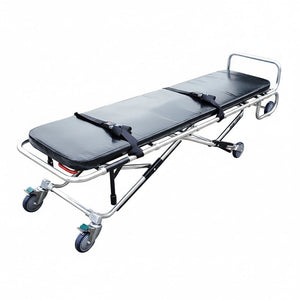
- Record dependencies such as door clearances, loading direction, transfer height, tray size, floor conditions and utilities where relevant.
- Request separate line items for equipment and selected accessories so the order can be reviewed by location and fiscal period.
- Review quote validity, current availability and delivery requirements before approving each phase; a planning quote is not a promise of a fixed future price.
Request a phased equipment or multi-location quote with the first purchase and later requirements clearly identified. Use the same approach for an independent facility, a public department or a corporate equipment-replacement program.
For several products or locations, request an itemized Commercial Walk-In Cooler Evaporators & Condensing Units quote with selected models, quantities and delivery ZIP codes. Use general customer support for selection questions, and review the written warranty terms before ordering.
Plan year-end equipment purchases around the actual equipment and timing
Review current catalog prices, choose the required configuration and separate the first purchase from later replacement phases. Build an itemized priced quote, or request a formal equipment quote with quantities, locations and your purchasing period. Request written price validity rather than assuming an unannounced future price increase or an additional sale discount.
Can Section 179 affect an equipment purchase?
For tax years beginning in 2026, IRS Revenue Procedure 2025-32 sets a maximum Section 179 expense deduction of $2,560,000, reduced when qualifying property placed in service exceeds $4,090,000. These are statutory limits, not a promise that this purchase or every buyer qualifies.
The IRS explains that property is generally placed in service when ready and available for its specific use. Eligibility, business use, taxable income and other requirements matter; ordering, financing or paying before year-end does not by itself establish a deduction. Confirm treatment and timing with your tax professional before relying on a tax benefit.
Use our 2026 Section 179 planning guide and illustrative calculator alongside the selected model's requirements. Confirm freight, installation responsibilities and availability separately; a year-end planning request is not a delivery guarantee.
Compare your options. Choose your next step.
One source for funeral supplies and mortuary equipment, with nationwide shipping. Review the Commercial Walk-In Cooler Evaporators & Condensing Units selection, compare product specifications and current pricing, then order the configuration you need or request an itemized quote.
- Choose the modelCompare the details against the work you need to do.
- Set your quantitiesReview the selected options and equipment subtotal.
- Buy or request a quoteReview freight, tax and available payment terms separately.
Need several items or delivery to more than one location? Include the models, quantities and delivery ZIP codes in your request. For general questions, contact customer support.