
Electric vs Manual Mortuary Cots: What Funeral Homes Need to Know
Electric vs Manual Mortuary Cots: What Funeral Homes Need to Know
By American Mortuary Coolers — updated 2026
The choice between an electric powered mortuary cot and a traditional manual model is one of the most consequential equipment decisions for a modern funeral home. Both types handle first call transport effectively — but they differ significantly in operational cost, staff safety impact, and long-term value. This guide breaks down the comparison so your team can make the right call for your removal volume, budget, and case mix.
How Manual Mortuary Cots Work
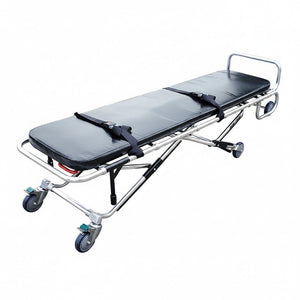
Manual mortuary cots use mechanical adjustment — typically a foot-operated lever, hand crank, or push-pull pin system — to raise and lower the cot platform. The operator applies physical effort to change height, lock casters, and maneuver the cot into position.
Advantages of manual cots:
- Lower purchase price — better for budget-constrained start-ups or single-director operations
- No battery dependency — always operational, no charging downtime
- Simpler maintenance — fewer components to service
- Lighter overall weight — easier transport of the cot itself
Disadvantages of manual cots:
- Greater operator strain — cumulative back and shoulder load over multiple removals per day
- Higher workers' compensation risk — manual lifting injuries are the top claim in funeral service
- Slower height adjustment — less efficient in time-sensitive hospital or nursing home calls
Browse our full line of manual cots including the PRO 500, PRO 650X, and PRO 1000X at the mortuary cots collection.
How Electric Powered Mortuary Cots Work
Electric mortuary cots — like the Powered Mortuary Stretcher Model 1000-PMC1 — use a rechargeable battery-powered motor to raise and lower the cot platform at the touch of a button. The operator controls height electronically, eliminating the physical effort of manual adjustment.
Advantages of powered cots:
- Dramatically reduced staff strain — critical for high-volume operations and bariatric cases
- Faster, more precise height adjustment — improves transfer efficiency
- OSHA ergonomic compliance — supports safer workplace practices
- Long-term ROI through reduced injury claims and improved staff retention
Disadvantages of powered cots:
- Higher upfront cost — offset by financing options
- Battery management required — charge schedules must be followed
- Heavier unit weight due to motor and battery
- More complex maintenance schedule
Which Type Is Right for Your Funeral Home?
Use this decision framework to match cot type to your operation:
- Low volume (under 5 calls/week), single director: A quality manual cot like the PRO 500 or PRO 650X is cost-effective and sufficient.
- Medium volume (5–15 calls/week): Consider a mixed fleet — manual cots for standard calls, one powered unit for heavy cases.
- High volume (15+ calls/week) or frequent bariatric cases: Powered electric cots are the clear choice for staff protection and operational efficiency.
- Solo operator operations: A powered cot significantly expands what one person can safely handle alone.
industry best practices reinforce that powered cots are becoming the professional standard in full-service funeral homes.
Frequently Asked Questions
How much does an electric mortuary cot cost vs. a manual one?
Manual mortuary cots generally range from a few hundred to several thousand dollars depending on the model. Powered electric cots carry a higher upfront cost but reduce staff injury risk and long-term liability expense. American Mortuary Coolers offers financing to make powered cots more accessible.
Can one person operate a powered mortuary cot?
Yes. Powered cots are designed for single-operator use in many scenarios, especially when combined with a slider board for the initial transfer. Always follow the manufacturer's team-lift requirements for your specific weight case.
How long does the battery last on an electric mortuary cot?
Battery life varies by model. Most commercial-grade powered mortuary cots are rated for multiple full days of operation per charge. Always charge overnight and carry a backup battery pack for high-volume days.
Are electric mortuary cots heavier than manual?
Yes, typically. The motor and battery add weight. However, the operator effort savings far outweigh the additional cot weight in most operational scenarios.
Do electric mortuary cots require special maintenance?
Powered cots require battery checks, motor connection inspections, and firmware updates (on digital models) in addition to standard frame and caster maintenance. AMC provides guidance for all models.
Where can I buy an electric mortuary cot?
American Mortuary Coolers sells the Powered Mortuary Stretcher PMC1 and other professional cots direct at mymortuarycooler.com/collections/mortuary-cots. Call 1-888-792-9315 for specifications.
140 Kwick Way Lane, Johnson City, TN 37615
Phone: 1-888-792-9315 | Email: sales@mymortuarycooler.com
Mortuary Cots | Morgue Coolers | Financing | Contact Us | FAQ

