


Used Mortuary Coolers for Sale — What to Know Before You Buy Refurbished
The Market for Used Mortuary Coolers: What You're Actually Buying
The secondary market for used mortuary coolers and refurbished mortuary coolers is real — and for the right buyer in the right situation, it can represent genuine value. Funeral homes downsizing operations, facilities upgrading to larger units, and estate liquidations all generate second-hand equipment that ends up on the market. But mortuary refrigeration is not like buying a used office desk. The stakes are high, the standards are non-negotiable, and a bargain that fails in service isn't a bargain at all.
This guide is written for funeral home directors, morgue managers, and medical examiner office administrators who are seriously evaluating the used equipment market. We'll walk through what "certified refurbished" actually means in this industry, what to inspect before you sign anything, and when buying used makes sense versus when it doesn't.
What "Certified Refurbished" Means — and What It Doesn't
The term certified refurbished mortuary cooler has no single governing definition in the death care industry. Unlike the electronics sector, where brands set formal refurbishment standards, mortuary equipment refurbishment varies widely by seller. When a dealer uses the word "certified," your first question should be: certified by whom, to what standard?
What a Legitimate Refurbishment Should Include
- Compressor replacement or rebuild — the compressor is the heart of any refrigeration system; a refurbished unit should document whether the original compressor was tested, rebuilt, or replaced outright
- Full sanitation and decontamination — the interior must be decontaminated to OSHA bloodborne pathogen standards; request documentation of the cleaning protocol used
- Door gasket inspection and replacement — worn gaskets are among the most common failure points; they should be visually inspected and replaced if there is any cracking, compression set, or loss of seal
- Insulation integrity test — foam insulation can degrade or become moisture-compromised; a legitimate refurbish includes thermographic or pull-down testing to verify R-value integrity
- Thermostat calibration and control system check — digital or analog controls must be verified against a calibrated reference thermometer across a 24-hour cycle
- Structural inspection — body trays, rollers, frame welds, and stainless steel surfaces should be free of corrosion, cracking, or deformation
If a seller cannot produce documentation for each of these areas, treat the unit as uninspected, not refurbished.
Pre-Purchase Inspection Checklist for Used Mortuary Coolers
Whether you inspect in person or hire a third-party refrigeration technician, use this checklist before committing to any used mortuary cooler for sale.
Compressor and Refrigeration System
- Ask for the compressor make, model, and manufacture date — compressors older than 10 years carry elevated replacement risk
- Request amperage draw readings at startup and steady-state operation
- Listen for unusual sounds: clicking, grinding, or short-cycling indicate imminent failure
- Verify refrigerant type — units using R-22 (phased out in the U.S.) will have ongoing refrigerant supply and service issues
- Check for evidence of refrigerant leaks: oil staining around fittings or low suction pressure readings
Insulation Integrity
- Ask for panel thickness specifications and compare to manufacturer original — compression or moisture damage reduces effective R-value
- Inspect panel edges and seams for delamination, water staining, or soft spots
- Run a 4-hour pull-down test: a properly insulated unit should reach target temperature (35–38°F) within 60–90 minutes under no load
Door Gaskets and Seals
- Conduct a paper-pull test: insert a sheet of paper in the closed door — it should grip firmly without slipping
- Inspect the full perimeter for cracks, gaps, compression set, or mold growth
- Verify door hinges and latch mechanisms operate smoothly without binding
Temperature Calibration and Control
- Place a calibrated digital thermometer inside the unit and run a 24-hour hold test — temperature should remain within ±1°F of setpoint
- Verify the alarm system (high-temp and power-failure alerts) functions correctly
- Confirm the control panel displays accurate temperature readouts
Sanitation and Interior Condition
- Inspect stainless steel surfaces for pitting, rust, or biological staining that indicates inadequate past maintenance
- Check drain lines for blockages or odor — persistent odor after cleaning signals compromised material
- Verify all body trays and roller systems are present, undamaged, and rated for appropriate weight capacity
Used vs. New: An Honest Comparison
| Factor | Used / Refurbished | New |
|---|---|---|
| Upfront Cost | Lower (typically 40–60% of new price) | Higher initial investment |
| Warranty | Limited (30–90 days typical, if any) | Full manufacturer warranty (1–5 years) |
| Remaining Service Life | Unknown without full history | Full projected lifespan (15–20 years) |
| Compliance Documentation | May require third-party verification | Manufacturer compliance certificates included |
| Energy Efficiency | Often lower — older compressor technology | Current efficiency standards; lower operating cost |
| Customization | Limited to existing configuration | Full spec customization available |
| Financing Availability | Difficult — most lenders require new equipment | Full financing programs available |
| Delivery Timeframe | Immediate (if local) | Ready-to-ship or custom build options |
When Buying Used Makes Sense — and When It Doesn't
Scenarios Where Used Equipment May Be Appropriate
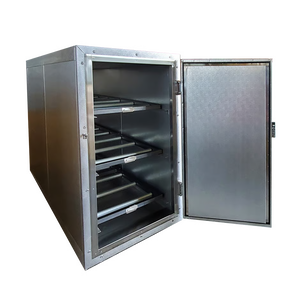
- Temporary capacity expansion — if you're bridging a gap while a new walk-in is being built or a permanent unit is on order, a used upright can serve as short-term overflow
- Severe budget constraints — startup funeral homes or small independent operators with strict capital limitations may need to start with used equipment and upgrade over time
- Secondary or backup unit — a used cooler as a backup for primary equipment failure is a reasonable use case, provided it has been properly tested
Scenarios Where New Equipment Is the Right Answer
- Primary facility refrigeration — your main mortuary cooler should be new, warranted, and compliant; this is not the place to cut corners
- Regulatory inspection is imminent — inspectors from state boards want to see documented, compliant equipment; used units without certification paperwork can trigger violations
- High-volume operations — facilities handling 10+ cases per month depend on refrigeration reliability; a used compressor that fails during a busy period creates serious operational and reputational risk
- You need financing — most equipment financing programs require new equipment; see our mortuary cooler financing options for flexible payment structures on new units
Red Flags to Walk Away From
When evaluating any used mortuary cooler for sale, these are absolute deal-breakers:
- Seller cannot provide original manufacturer documentation or model information
- Unit uses R-22 refrigerant (discontinued in the U.S. — parts and refrigerant are increasingly unavailable)
- Visible rust on interior stainless steel surfaces — indicates long-term moisture exposure and compromised sanitation
- No warranty whatsoever, even a 30-day limited warranty
- Seller refuses to allow a pre-purchase inspection by a licensed refrigeration technician
- Unit was used in a facility that closed due to a regulatory violation — request the facility's license history
- Temperature logs or service records are unavailable — a well-maintained unit should have records
A Competitive Alternative: Ready-to-Ship New Mortuary Coolers
Many buyers gravitate toward used equipment primarily because of delivery time — they need a unit now, not in eight to twelve weeks. If that's your situation, consider our ready-to-ship mortuary equipment collection, which includes new, warranted units available for immediate delivery.
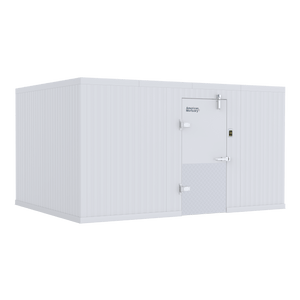
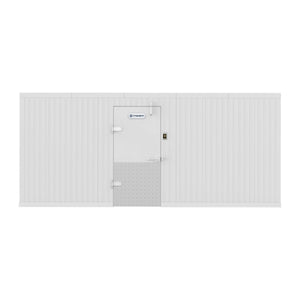
Our full mortuary cooler collection includes options ranging from 2-body units to walk-in configurations, many available for fast shipment. You get full manufacturer warranty, compliance documentation, and the confidence that comes with new equipment — often at a price that competes directly with the refurbished market when you factor in the total cost of ownership.
If you have questions about what's in stock or need help comparing options, our team can walk you through the details. Review our frequently asked questions for additional guidance on specifications, lead times, and warranty terms.
Ready to Order? Talk to an Expert Today
Whether you're evaluating used equipment or ready to purchase new, the team at American Mortuary Coolers is here to help you make the right call for your facility. Call us at 1-888-792-9315 or browse our complete mortuary cooler collection. BBB A+ rated, NFDA 2026 Supplier, OSHA certified — we stand behind every unit we sell.
