


Dip Tank & Dissection Table Guide 2026 — Anatomy Lab Equipment for Teaching Hospitals & Medical Schools

Dip Tank Dissection Tables in 2026 — What's Changed and What Matters
Dip tank dissection tables — immersion systems where cadavers are stored submerged in fixative and raised to a working surface for dissection — have been part of anatomical education since the mid-twentieth century. But the systems available in 2026 are substantially different from those installed a decade ago in terms of lift reliability, fixative compatibility, safety integration, and total cost of ownership. This guide brings anatomy lab directors, teaching hospital facility planners, and medical school administrators up to date on what modern dip tank systems offer and how to specify them for your program.
American Mortuary Coolers & Equipment manufactures electric immersion dissection tables and manual immersion dissection tables in Johnson City, Tennessee. Founded 2009. A+ BBB rated. 7,500+ customers. Factory-direct, no dealer markup. Call 1-888-792-9315.
What "Dip Tank" Actually Means in Modern Anatomy Labs
The Term Explained
In anatomy lab vernacular, "dip tank" and "immersion table" are used interchangeably. The "dip" refers to the action of lowering (dipping) the cadaver into fixative for storage. The table component refers to the integrated work surface the cadaver is raised to for dissection. It is a single piece of equipment serving dual functions: long-term cadaver storage in fixative, and active dissection surface when needed.
This contrasts with programs that use a separate external tank or refrigerator for cadaver storage and a standard flat dissection table for the working surface — in those programs, cadaver transfer between storage and table is a daily labor step that immersion tables eliminate.
How Modern Systems Differ From Legacy Equipment
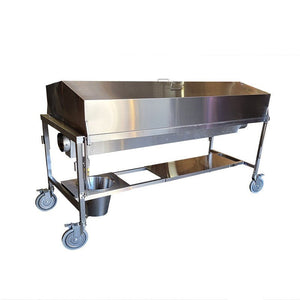
Legacy immersion systems from the 1980s and 1990s used simple mechanical counterbalance lift systems with minimal safety features — no lift speed control, no limit switches, no emergency stop, and no modern electrical safety compliance. Modern systems from American Mortuary Equipment incorporate: motorized lift with controlled speed, limit switches at top and bottom of travel, GFCI electrical protection, sealed stainless tank construction with full drain accessibility, and cover systems that reduce formalin vapor release between sessions.
Regulatory Updates Affecting Dip Tank Installations in 2026
OSHA Formaldehyde Standard
OSHA 29 CFR 1910.1048 remains the primary federal regulatory driver for anatomy labs using formalin-based fixatives. The standard's requirements have not changed substantively in recent years, but enforcement in academic settings has increased. EH&S offices at major research universities have become more proactive about anatomy lab air monitoring, and the results frequently reveal exposure levels at or above the 0.5 ppm action level. Immersion tables with sealed lids are an important engineering control that reduces formalin vapor generation significantly compared to open-top cadaver storage. See our Compliance Roadmap.
State Anatomical Board and Health Department Requirements
An increasing number of states have updated their anatomical board regulations to require more explicit documentation of cadaver storage conditions, including fixative concentration monitoring logs and equipment maintenance records for immersion systems. If your state has updated its anatomical disposition regulations in the past three years, verify that your immersion table documentation protocols meet the new requirements. Our team can advise on state-specific requirements — call 1-888-792-9315.
Specifying Dip Tank Systems for Teaching Hospitals
Teaching Hospital Anatomy Program Context
Teaching hospitals operate anatomy and pathology labs in a fundamentally different institutional environment from freestanding medical schools. Anatomy programs at teaching hospitals are often embedded in clinical facilities, subject to Joint Commission standards in addition to state anatomical board requirements, and must integrate with hospital infection control protocols. The cadavers in teaching hospital anatomy labs are often received through formal body donor programs affiliated with medical school anatomy departments.
Integration with Hospital Infrastructure
Teaching hospital anatomy labs typically have well-developed HVAC, plumbing, and electrical infrastructure because they share support systems with clinical laboratory and pathology spaces. This makes specifying electric immersion tables straightforward — power is available at each position. However, exhaust ductwork routing may be constrained by existing mechanical systems. Confirm ventilation design with your hospital's facilities engineering team before finalizing table positioning.
Transport and Receiving Equipment
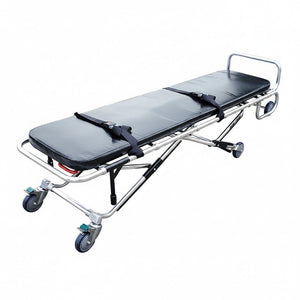
Teaching hospital anatomy programs receive cadavers through a formal intake process that includes documentation, identification verification, and transfer to the anatomy lab. The equipment for this process includes: hydraulic concealed cadaver transport carts for receiving donors from vehicles; cadaver stretcher carts for internal transfer; and powered scissor lifts for elevation changes between loading docks and lab floors.
Specifying Dip Tank Systems for Medical Schools
Medical School Cadaver Program Scale
Medical school anatomy programs using immersion tables range from 20 tables at smaller programs to 80+ tables at large research universities with multiple class cohorts. At this scale, individual table specifications matter enormously to total program cost — a specification change that adds $200 per table adds $4,000–$16,000 to a large program's equipment budget. Get complete specifications in writing and verify them against your budget before purchase.
Accessory Equipment for Each Station
Each immersion table station in a medical school setting should be equipped with: stainless dissecting tray with wax for removed organs, dissecting pan for fluid collection, body positioner set, human torso anatomy model for reference, and anatomical chart set. Budget $500–$800 per station for these accessories in addition to the immersion table cost.
The Total Cost of Ownership Calculation
When comparing immersion tables against traditional refrigerated storage plus standard dissection tables, calculate total cost of ownership over your expected equipment service life (typically 15–20 years for stainless anatomy equipment). Include: equipment purchase cost, installation cost, annual maintenance, fixative cost, cadaver transfer labor (zero for immersion tables; significant for transfer-based programs), and ventilation infrastructure. In programs with 15+ cadavers, immersion tables typically achieve cost parity or better versus refrigerated storage plus standard tables within 5–7 years, with better tissue quality and reduced labor as ongoing benefits. See the full pathology and autopsy equipment collection for all relevant products.
Related Resources
- Immersion Dissection Table Guide
- Electric vs. Manual Immersion Dissection Table
- Immersion Tables for University Cadaver Programs
- Dip Tank Dissection Tables Guide
- Anatomy Lab Equipment: Immersion Tanks
- Teaching Hospital Anatomy Lab Equipment
Request 2026 Pricing and Specifications
American Mortuary Coolers & Equipment provides 2026 pricing on electric and manual immersion dissection tables factory-direct from Tennessee — no dealer margins, no distributor markup. We ship to teaching hospitals, medical schools, and anatomy programs nationwide. Call 1-888-792-9315 or email service@mymortuarycooler.com. FREE Level 2 White-Glove Installation on qualifying orders. Section 179 deductions and 24-hour financing available.
American Mortuary Coolers & Equipment | Tennessee-Built Since 2009 | A+ BBB Rated | Pathology & Autopsy Equipment | Embalming Tables | Vault Morgue Coolers | All Mortuary Coolers | Financing | Compliance Roadmap | Contact Us | Warranty & Service
