


Professional equipment scope | Written RFQ review
Deployable morgue solutions & field equipment planning
Treat deployable morgue planning as a coordinated equipment and site-readiness review. Emergency managers, hospital preparedness teams, public agencies and mortuary planners need a defined location, operating scope and responsible parties before a proposed cooler or storage arrangement can become part of an operational plan.

Define the equipment and operating scope
Define the mission before the equipment
Separate receiving and temporary storage from examination, identification, personal-effects handling and release. List which functions the proposed site will actually perform and which remain with the responsible agency. An equipment supplier’s quote is not an incident-command plan or a mortuary operations authorization.
Evaluate the staging location
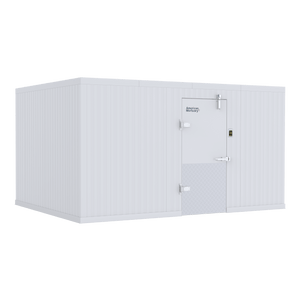
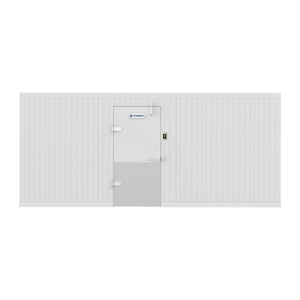
Provide the site address, proposed enclosure location, available working area and access route. Identify indoor or outdoor use, environmental exposure, security and privacy requirements, and any restrictions on placement. A product image is a catalog reference, not evidence that the equipment has been approved for a field installation.
Refrigeration and utility responsibilities
Ask for model-specific electrical requirements and the proposed installation scope. Identify responsibility for power connection, backup arrangements, operating checks and service access. Do not assume a selected cooler can run on a portable generator, tolerate outdoor exposure or operate without site preparation.
Storage and transfer as one system
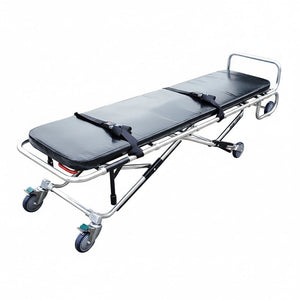
Include racks, boards or trays and the handling devices needed to reach each proposed storage level. Record receiving height, passage widths, turning space and the expected size range. Separate equipment capacity from staffing decisions and operating procedures that remain the responsibility of the response organization.
Mobilization, receiving and demobilization
Request written review of freight access, unloading equipment, placement and assembly responsibilities. Include the requested ready-for-use date without treating it as a promised deployment time. A field request should also identify cleaning, inspection, removal and storage responsibilities after the temporary operation ends.
Procurement for a public-agency scope
Include bid instructions, agency purchasing requirements, required classifications and requested submittals. If a contract calls for origin documentation or a particular listing, name the requirement for the exact item. No emergency-services affiliation, federal approval or disaster-response certification is implied by this planning page.
Equipment references for a coordinated quote
Review these existing product records by model and intended use. Product presence is not a compatibility statement, rental offer, clinical qualification or confirmation that an accessory is included.
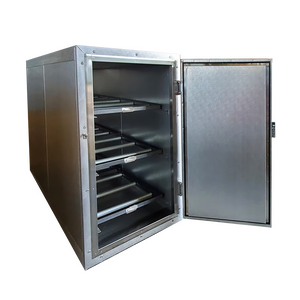
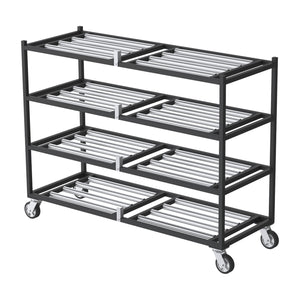
 4-Tier Cantilever Mortuary RackModel / SKU: Model#4T-C-1Review model, documentation and configuration
 HD Mortuary Plastic Storage BoardReview model, documentation and configuration
 HD 1000 MAX Mortuary Lift G1 with Multi-Directional TopModel / SKU: HD1000Review model, documentation and configuration
A project-ready equipment RFQ
Facility and purchasing contact
Identify the owner, site location, responsible purchasing contact, intended use and project stage. Include the bid reference and instructions if the request is part of a public or institutional procurement.
Equipment schedule and interfaces
List selected models, quantities, options, room dimensions, access openings and transfer requirements. Keep each cooler, rack, cot, lift, board, tray and accessory separately identified.
Utilities and delivery responsibilities
Describe the proposed location, available utilities, receiving conditions, unloading and placement scope. Requested dates are planning inputs, not a delivery commitment.
Technical and purchasing documents
Request the applicable drawings, CAD availability, installation information, maintenance documents, warranty, manufacturer identity and origin records. Identify requested NAICS, UNSPSC, PSC/FSC, NIGP, SIC, CSI or HS/HTS classifications for item-level review; no code or qualification is invented.
Work with a family-owned and operated business on a documented equipment request. American-made or domestic-preference requirements must be checked for the exact quoted items; they are not blanket claims for every catalog product.
Coordinate the broader response plan
The ASPR TRACIE Fatality Management collection describes the coordinated roles of healthcare, public health, emergency management, medical examiners/coroners and funeral-service organizations. Use its planning resources alongside the responsible agency’s current procedures; the reference does not endorse AMC or approve an equipment configuration.
For historical facility-planning context, the 1998 OJP Forensic Laboratories planning handbook addresses facility planning and service coordination. It is not a current code standard, clinical protocol or product certification.
Selection and procurement questions
Is this a preapproved disaster portable morgue unit?
No. The page supports equipment scope review. It does not establish a certified portable morgue package, government designation, approved incident role or operational deployment service.
Are trailers, containers or inflatable shelters included?
Only if specifically identified and confirmed in a written scope. The catalog cooler and rack references shown here do not establish that AMC supplies every type of temporary shelter or transport platform.
Can you guarantee deployment in a stated number of minutes?
No deployment-time claim is made. Confirm manufacturing availability, freight, site preparation, assembly, utility connection and commissioning responsibilities before adopting a readiness date.
Which details make a field-site RFQ useful?
Provide the requested dates, site conditions, storage requirement, receiving route, utilities, agency contact, procurement instructions and exact equipment references. Do not send sensitive incident or decedent information through a public intake form.
