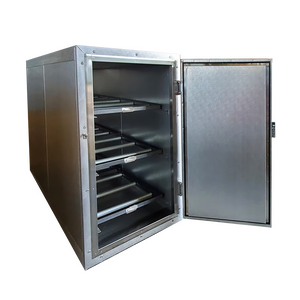
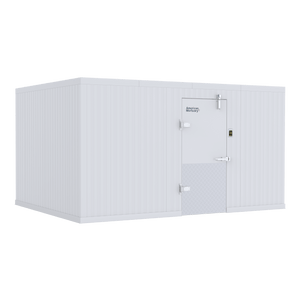
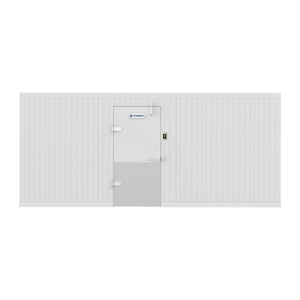
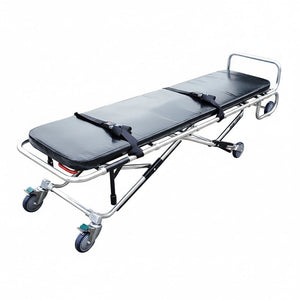
Shop Mortuary Lifts, Racking Systems & Storage Trays
Compare the actual equipment below, choose the required options and add an eligible configuration to your cart. Quote-only and configured systems retain their dedicated product path.
Compare powered and manual hydraulic mortuary lifts, cadaver lifts and body lifts. Review capacities, transfer heights, specifications and quote options.
Compare professional mortuary lifts for funeral homes, crematories, hospital morgues, medical examiner facilities and anatomy programs. Start with the low-profile powered lift for daily, single-operator workflows, or choose the manual hydraulic alternative when simple foot-pump operation and a lower purchase price matter most.
Choose a mortuary lift around the complete transfer workflow
A mortuary lift, cadaver lift or body lift should reduce manual handling while matching the surfaces already in your facility. The right choice depends on the lowest transfer point, highest rack or retort position, load capacity, deck direction, aisle width, doorway clearance and preferred power source.
For many facilities, the practical decision is between a powered low-profile mortuary scissor lift and a manual hydraulic lift. Both are built around high-capacity professional body handling, but they solve different workflow and budget needs.
Featured mortuary lifts
Flagship powered option
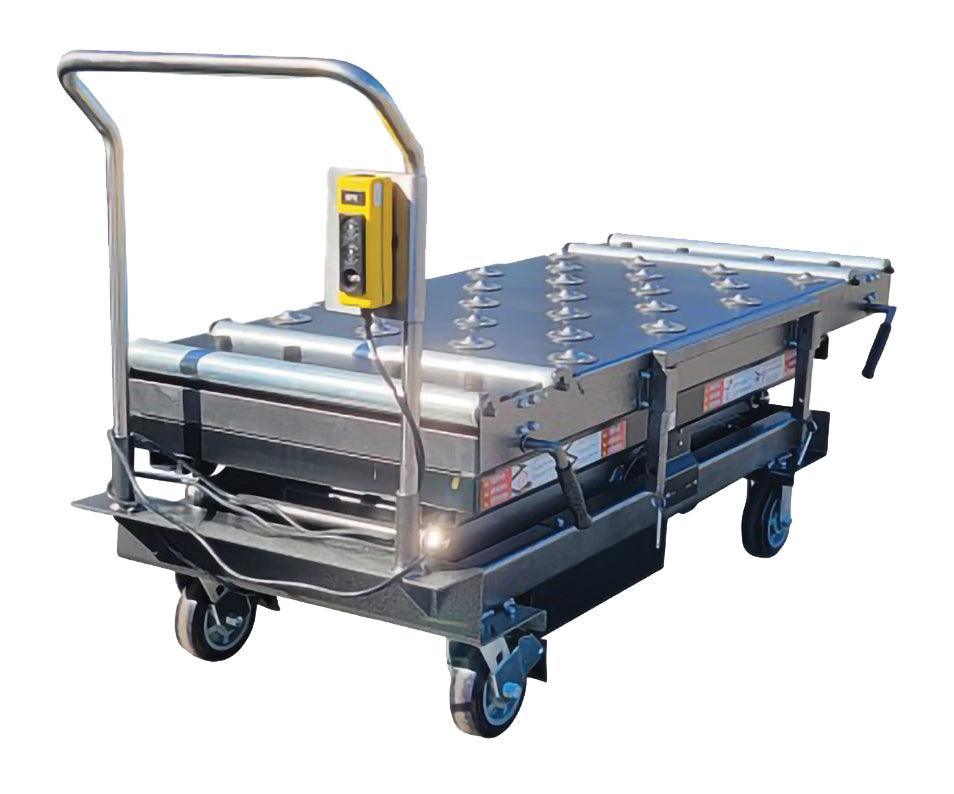
Low-Profile Powered Mortuary Lift
From $5,997.25
This 1,000 lb powered double-scissor lift is designed for controlled transfers among cots, cooler racks, prep tables, body trays and crematory handling positions. A 12V DC battery and onboard charger support powered elevation, while the universal roller top supports side- and end-loading workflows.
1,000 lb working capacity
13-inch published minimum lowered height without scale
Approximately 13.5 inches lowered with optional scale
Best fit: frequent daily transfers, low receiving surfaces and facilities that prefer push-button powered elevation.
Economical hydraulic alternative
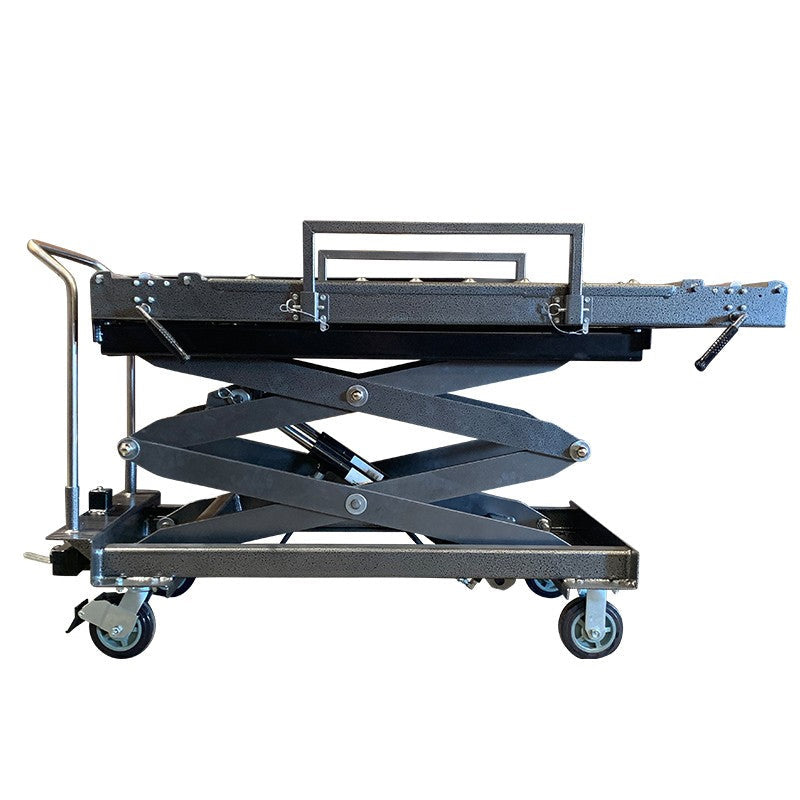
1,000 lb Manual Hydraulic Mortuary Scissor Lift
From $4,579 without scale
The H1000-M is a heavy-duty manual hydraulic scissor lift for funeral homes, crematories, morgues and medical examiner facilities. Foot-pump actuation provides controlled height adjustment without a battery or electrical connection.
Best fit: facilities prioritizing mechanical simplicity, reliable manual operation and lower initial cost.
Fit-critical specifications should be confirmed against the current factory drawing before ordering. Prices shown are current product configurations and can change.
Powered vs. manual hydraulic mortuary lift
Decision point
Low-profile powered lift
Manual hydraulic lift
Operation
12V battery-powered elevation with integrated charger
Foot-pump hydraulic elevation; no battery required
Capacity
1,000 lb
1,000 lb
Lowest transfer
13 inches without scale; approximately 13.5 inches with scale
Confirm the current factory drawing for your selected configuration
Loading direction
Universal top supports side and end loading
Confirm deck and transfer direction for the selected configuration
Starting price
$5,997.25 without scale
$4,579 without scale
Choose it when
Powered lift cycles, low-profile access and frequent transfers are priorities
Budget, mechanical simplicity and manual operation are priorities
What to verify before ordering a cadaver or body lift
Transfer heightsMeasure the lowest cot, tray or deck and the highest rack tier, table or retort position.
Load and platformConfirm working capacity, body-board or tray width, deck length and the need for an integrated scale.
Travel pathCheck door openings, turning radius, aisle width, floor transitions and elevator capacity.
Loading directionIdentify whether each receiving surface requires side loading, end loading or both.
Power preferenceCompare powered battery operation with manual hydraulic operation and charging access.
Freight and receivingPlan the commercial delivery point, unloading equipment and inside-placement needs before shipment.
Build a complete body-handling workflow
Mortuary lifts work best when they are planned with storage racks, trays, body boards, coolers and preparation-room equipment. Use these related resources to check the full transfer path.
When a standard mortuary scissor lift doesn't reach your retort door, cooler tiers or trays, we can build one to your measurements. Choose the platform size, working heights, capacity, top surface, power and scale, and we'll confirm what can be built and quote it in writing.
A mortuary lift raises and positions bodies, caskets, cremation containers, trays or body boards between different working heights. Common transfers include cot to cooler rack, rack to prep table, table to transport deck and staging for a crematory retort.
Is a cadaver lift different from a mortuary lift?
The terms often describe the same general equipment. “Cadaver lift” is common in hospitals, medical examiner facilities and anatomy programs, while “mortuary lift” and “body lift” are common in funeral-home and crematory settings. The correct configuration still depends on capacity, working heights and loading direction.
Why choose a low-profile powered mortuary lift?
A low-profile powered lift is useful when the lowest receiving surface is close to the floor and the facility performs frequent lift cycles. Powered elevation reduces repeated manual pumping, and the featured universal top supports both side- and end-loading transfers.
Why choose a manual hydraulic mortuary scissor lift?
A manual hydraulic lift offers high-capacity positioning without batteries or charging. It is often the more economical choice for facilities with moderate lift frequency or a preference for simple foot-pump operation.
What minimum height should I use for the low-profile powered lift?
Use 13 inches as the published minimum lowered height for the no-scale configuration and approximately 13.5 inches with the optional scale. Earlier 12-inch marketing references conflict with the current published equipment description, so fit-critical orders should be checked against the current factory drawing.
Can American Mortuary Equipment review my facility measurements?
Yes. Send the lowest and highest transfer heights, load requirement, tray or board dimensions, loading direction, aisle and door clearances, and receiving conditions. The equipment team can use those details to prepare a fit review and formal quote.
Request a mortuary lift fit review
Share your transfer heights, loading direction and facility constraints. An equipment specialist can help compare the powered and manual hydraulic options and prepare a formal quote.
Prefer to talk? Call 1-888-792-9315 Monday–Friday, 8 a.m.–6 p.m. ET.
Match racks, lifts, trays and boards to the loading arrangement
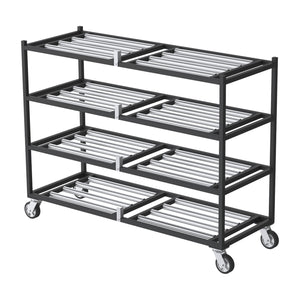
Compare the selected storage or transfer component against the equipment already in your facility. Tier count, loading direction and a similar product name do not establish compatibility on their own.
Dimensions: check rack footprint, tray size and usable clearances.
Movement: distinguish storage components from transfer and lifting equipment.
Interface: verify the listed loading direction, supports and attachment requirements.
Rating: review the stated limit for each component in the selected arrangement.
Plan phased rack, lift and transfer-equipment purchases
Start with an inventory of the equipment in service, its dimensions and the workflow that must stay available during replacement. Identify the units needed first, the interfaces that must remain compatible and the later phases you want to budget. Separate a planning quantity from an approved purchase.
For each phase, identify the model or specification, quantity, delivery location and intended purchasing period.
Record dependencies such as door clearances, loading direction, transfer height, tray size, floor conditions and utilities where relevant.
Request separate line items for equipment and selected accessories so the order can be reviewed by location and fiscal period.
Review quote validity, current availability and delivery requirements before approving each phase; a planning quote is not a promise of a fixed future price.
Request a phased equipment or multi-location quote with the first purchase and later requirements clearly identified. Use the same approach for an independent facility, a public department or a corporate equipment-replacement program.
Plan year-end equipment purchases around the actual equipment and timing
Review current catalog prices, choose the required configuration and separate the first purchase from later replacement phases. Build an itemized priced quote, or request a formal equipment quote with quantities, locations and your purchasing period. Request written price validity rather than assuming an unannounced future price increase or an additional sale discount.
Can Section 179 affect an equipment purchase?
For tax years beginning in 2026, IRS Revenue Procedure 2025-32 sets a maximum Section 179 expense deduction of $2,560,000, reduced when qualifying property placed in service exceeds $4,090,000. These are statutory limits, not a promise that this purchase or every buyer qualifies.
The IRS explains that property is generally placed in service when ready and available for its specific use. Eligibility, business use, taxable income and other requirements matter; ordering, financing or paying before year-end does not by itself establish a deduction. Confirm treatment and timing with your tax professional before relying on a tax benefit.
Use our 2026 Section 179 planning guide and illustrative calculator alongside the selected model's requirements. Confirm freight, installation responsibilities and availability separately; a year-end planning request is not a delivery guarantee.
Compare your options. Choose your next step.
One source for funeral supplies and mortuary equipment, with nationwide shipping. Review the Mortuary Lifts, Racking Systems & Storage Trays selection, compare product specifications and current pricing, then order the configuration you need or request an itemized quote.
Choose the modelCompare the details against the work you need to do.
Set your quantitiesReview the selected options and equipment subtotal.
Buy or request a quoteReview freight, tax and available payment terms separately.
Need several items or delivery to more than one location? Include the models, quantities and delivery ZIP codes in your request. For general questions, contact customer support.
Scroll to the top of the page
Choosing a selection results in a full page refresh.